2026-08-28 · Dave Kessler · 4 min read
Crawl Space Vapor Barriers and Mold
Soil is a humidifier. Plastic only works if it actually covers the soil and stays put.
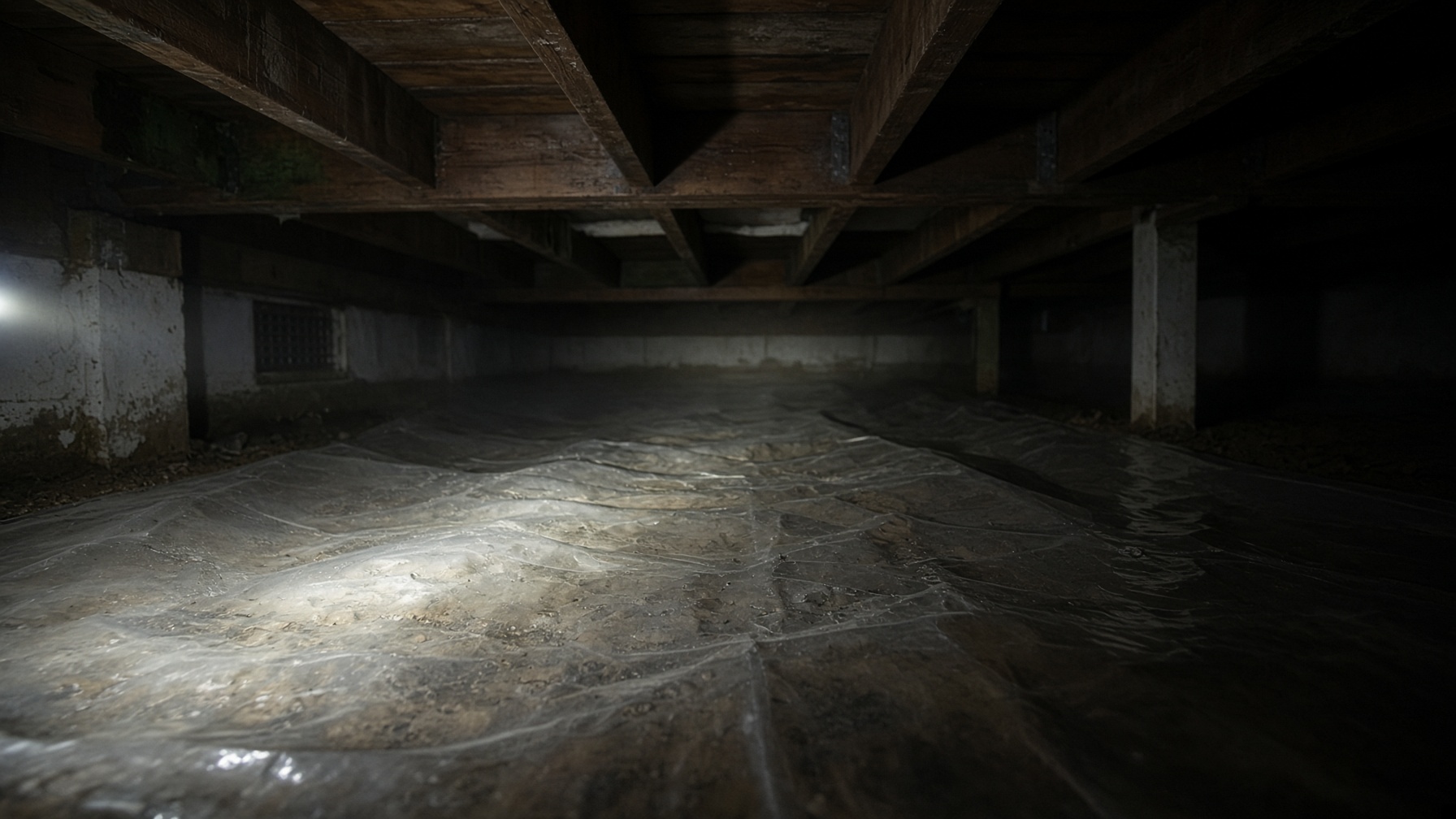
- What we crawl through
- A barrier that deserves the name
- Vents: the argument in one paragraph
- How you know it worked
What we crawl through
Spring Garden bungalows, East York additions, and a lot of mid-century houses have vents, a little plastic, and joists that have been damp for decades. The plastic, when it exists, is often 6-mil scraps with soil on top, which means the soil is still the ceiling of the dirt. Insulation hangs like wet cotton candy. That is the photo in crawl space mold.
If we are there for crawl space radon mitigation, the radon detail and the moisture detail have to be designed together. A fan that pulls from a moldy crawl into a pipe is fine only if the crawl is isolated from the house and the pipe is tight. A fan is not a dryer.
A barrier that deserves the name
- Remove debris and standing water first. Plastic over a pond is a balloon.
- Use reinforced polyethylene, commonly 10–20 mil in encapsulations, not a painter’s drop cloth.
- Overlap seams and seal them. Run the sheet up piers and walls and fasten it so it cannot fall.
- Drain bulk water to daylight or a sump before you talk about closing vents.
- Wet fiberglass comes out. It does not “dry in place” against a joist that has already grown mold.
Vents: the argument in one paragraph
Old code loved vents. In a humid York summer, vents often import wet air onto cold surfaces. In winter they can freeze pipes. Closing vents only makes sense after the soil is covered and bulk water is handled. Closing vents over bare dirt makes a still, damp cave. I will not tell you to screw plywood over a vent and walk away.
How you know it worked
The smell fades over a couple of weeks, wood moisture in the joists drops, and a gauge in the crawl sits under 60% without a swamp on the plastic. If the first hard rain refills the low spot, the barrier was step two and you skipped step one.
Questions people also ask
+Does a vapor barrier stop radon?
+Can I lay plastic myself?
These pages are homeowner education from Radon Mitigation of York, written by Dave Kessler. They are not a medical diagnosis, a species identification, or an insurance determination. Color does not tell you which mold you have. If someone in the house is sick, talk to a physician. EPA's homeowner guidance treats roughly 10 square feet as the line where many people stop DIY cleanup and call a remediation crew — sooner if sewage, HVAC, or anyone immunocompromised is involved. We are a radon and basement crew. When we are already under a York house we will tell you what we see and what we would do in our own place. We do not pretend a radon fan is a mold remedy.