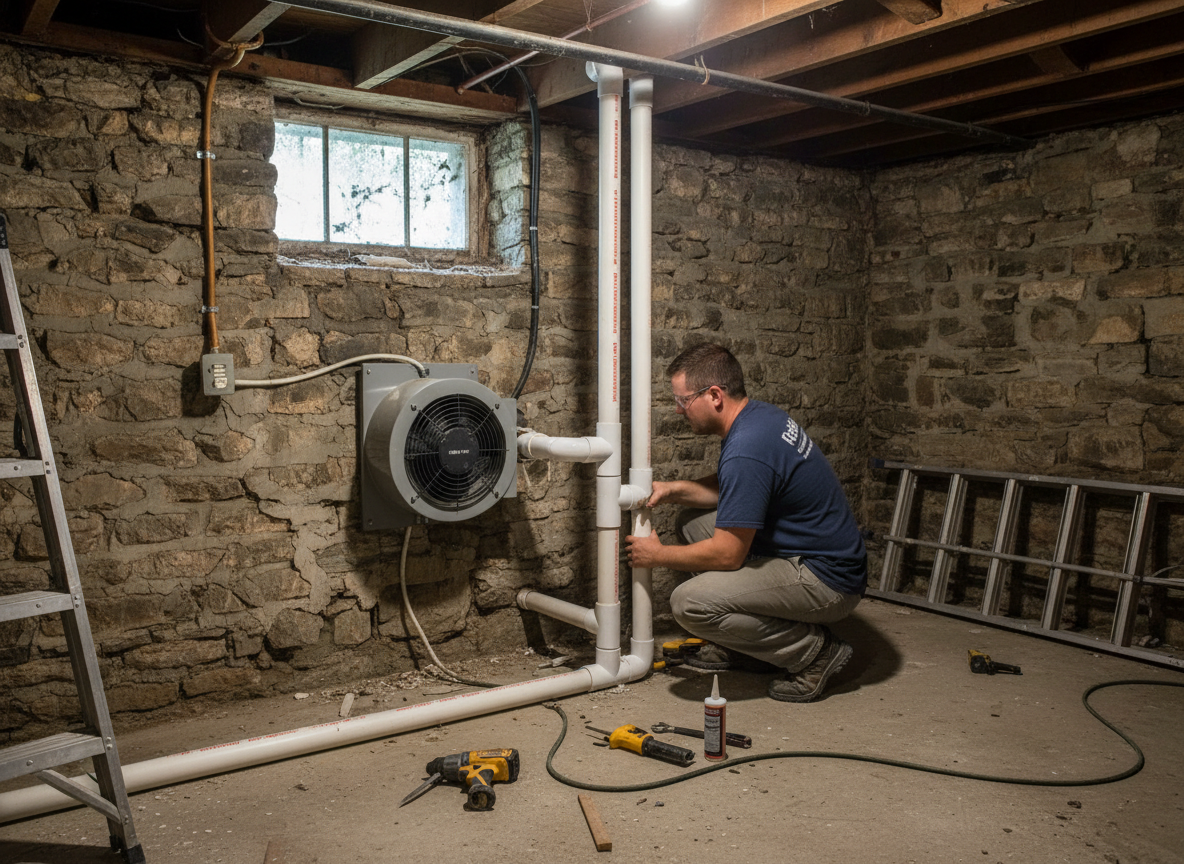
West York sits just off Route 462 (West Market Street), a corridor lined with early-to-mid 20th century rowhomes and cape cods that back up to small, tight lots. A lot of these houses have stone or block foundations with crawlspaces added or altered over the decades, which means radon entry points aren't always where you'd expect. We've pulled test kits from basements near Highland Avenue and found readings that surprised even long-time homeowners.
York County sits on karst geology with a lot of limestone bedrock, and West York's older housing stock often has dirt-floor crawlspaces or partially finished basements that were never sealed for soil gas. Combined with the region's humid summers and cold winters, those homes see enough seasonal pressure changes that a mitigation system sized right in October can underperform if it's not installed to account for how the house breathes year-round.
We work houses off Roosevelt Avenue, around West York Area Middle/Senior High School, and down toward Belmont Street, where a mix of slab-on-grade additions and original stone foundations means no two jobs look the same. Some homes need a sub-slab suction point, others need sealed sump coverage plus a crawlspace vapor barrier. We size and route every system based on what's actually under the house, not a generic template.
Around West York
We regularly work near:
- 📍West York Area Senior High School
- 📍West Market Street (Route 462) corridor
- 📍Highland Avenue
- 📍Belmont Street
- 📍Roosevelt Avenue
- 📍North Newberry Street
Radon Mitigation in West York — Local Notes
- •Many West York homes have stone or rubble foundations from original construction, which often requires sealing multiple gaps and mortar joints rather than a single sub-slab point.
- •Crawlspace-only homes near Belmont and Roosevelt often need a vapor barrier tied into the mitigation fan intake to get consistent readings.
- •Karst limestone under much of York County can create uneven soil gas movement, so we always retest after install rather than assume a standard fan size will hold.
- •Cold winters mean fan and pipe placement has to avoid freeze-prone exterior runs, especially on north-facing walls common in this neighborhood's older housing.