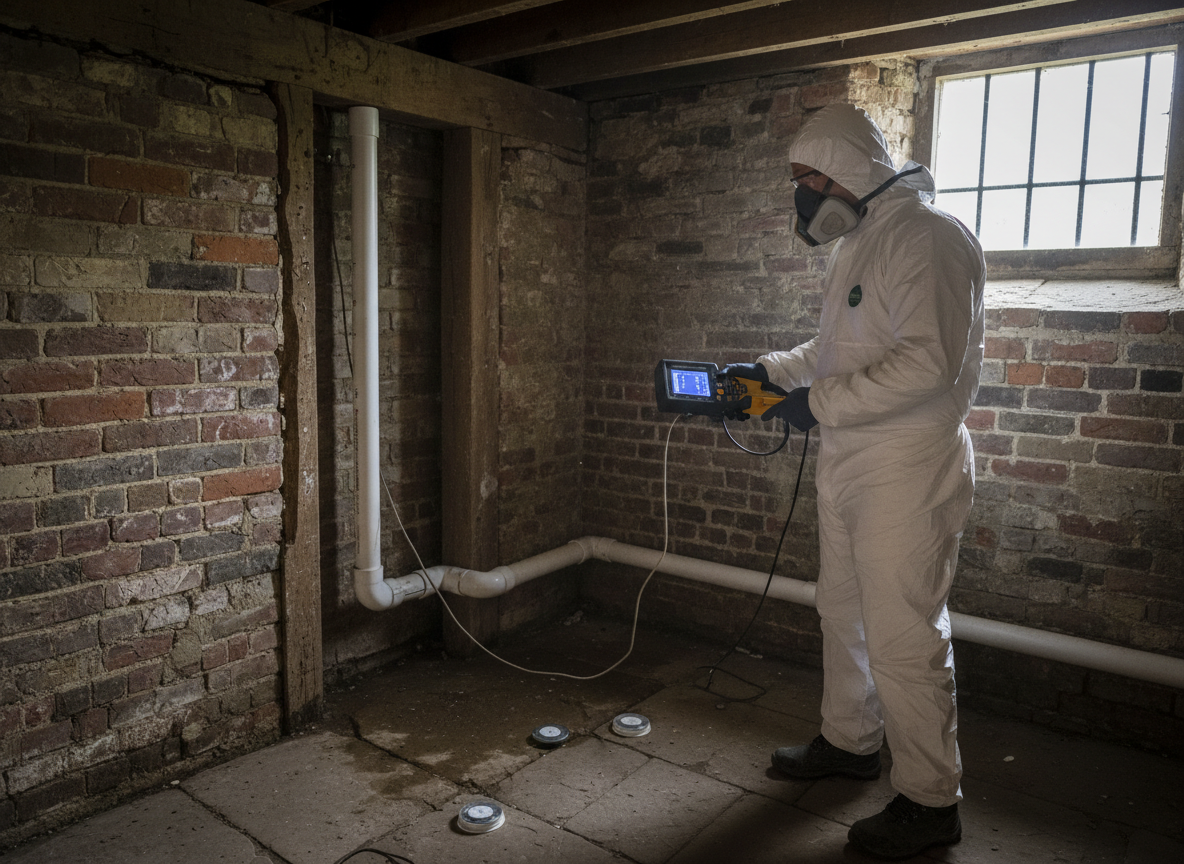
A radon mitigation system that isn't tested afterward is just a guess with a fan attached. In York County, where housing stock ranges from pre-war brick rowhomes in Downtown York and West York to newer builds out toward Spring Garden Township, the soil gas pathways under each foundation are different, and so is how each system performs once it's running. We install, then we test — not on hope, but with a properly placed continuous monitor or short-term test kit that gives you a real number to compare against the original reading.
Timing matters more than people think. Test too soon after startup and you can get a falsely low reading because the fan hasn't fully stabilized soil gas flow through the slab or crawlspace; test with doors and windows wide open during a mild fall day and you can mask a problem that shows up again once the York winters set in and the house gets sealed up tight. We follow standard closed-house conditions for the test window, which sometimes means asking homeowners near Central Market House or in older Devers and Pinehurst homes to hold off on running window units or opening basement doors for the duration.
Edge cases come up more than you'd expect. Homes with sump pits that weren't properly sealed during mitigation, multi-zone foundations (common in additions built onto older East York and North York homes over the decades), and houses with radon-in-water contributions from private wells out near Codorus State Park can all throw off a post-mitigation number even when the system itself is functioning correctly. When a retest comes back high, we don't just hand you a report — we go back to the system, check fan suction at each pipe run, and diagnose whether it's a sealing gap, a fan sizing issue, or a secondary source before recommending changes.
Technician insight
In York, the thing that catches most people out with post-mitigation testing is timing it around the weather instead of the house. I've seen homeowners in West York run a test on a mild 65-degree day with the basement door propped open for laundry, get a clean low number, then call worried in January when it climbs back up once the house is sealed against the cold. The system itself was fine both times — it's the test conditions that changed, not the radon.
Retest Flagged a Sealing Gap in an East York Split-Level
A homeowner in East York had a system installed elsewhere and wanted an independent post-mitigation test before listing the house. The continuous monitor came back higher than expected for a working system. We found the sump pit cover — original to the mitigation install — had a hairline gap where the lid met the basin, letting soil gas bypass the pipe. Resealing it and retesting brought the number down to where it should have been for the sale.
Post Mitigation Testing Services We Offer
✓Continuous Radon Monitor Testing
Digital monitor placement for a multi-day reading that shows hour-by-hour radon levels, useful for catching fluctuations a short-term kit might miss.
✓Short-Term Charcoal Kit Testing
A faster, lower-cost verification option for straightforward single-zone basements and crawlspaces in older York rowhomes.
✓Real Estate Closing Verification Tests
Documented post-mitigation results for buyers, sellers, or agents in York County home sales who need proof the system is performing before closing.
✓Multi-Zone Foundation Retesting
Separate testing for additions and split-level sections common in East York and North York homes, where one system zone can perform differently than another.
✓System Diagnostic Retest
For homes with a stubborn high reading after initial mitigation — we retest and inspect fan suction, sealing, and pipe placement to find the cause.
✓Well Water Radon Cross-Check
For properties on private wells near Codorus State Park where water-borne radon can influence air readings even with a working air mitigation system.
Post Mitigation Testing Cost in York, PA
| Service | Typical Range | What Affects It |
|---|---|---|
| Short-Term Charcoal Kit Test | $100–$175 | Standard single-zone basement or crawlspace |
| Continuous Monitor Test | $150–$250 | More detailed data, useful for real estate or multi-day verification |
| Real Estate Closing Verification | $150–$275 | Includes documented report for buyer/seller/agent |
| Multi-Zone Retest | $200–$350 | Additions or split-level foundations needing separate readings |
| System Diagnostic Follow-Up | $100–$300 | Depends on whether it's a sealing fix, fan issue, or pipe adjustment |
Ranges are typical for York, PA and confirmed with an exact written quote before any work starts.
How it works
- 1
Schedule After Startup
We wait the recommended stabilization period after system activation before placing a test, so the reading reflects real steady-state performance, not a system still settling in.
- 2
Set Closed-House Conditions
We walk the homeowner through keeping windows and exterior doors closed for the test window — critical in York's humid summers when the temptation to run window units instead of central air can skew airflow.
- 3
Place and Monitor the Test
Monitor or kit is placed in the lowest livable area, away from drafts, sump covers, and exterior walls, per standard placement practice.
- 4
Collect and Analyze Results
We retrieve the device or kit and review the readings against your original pre-mitigation baseline.
- 5
Report and Next Steps
You get a clear written result. If levels are still elevated, we diagnose the system on-site rather than just recommending you buy another test.
Pricing
Most post-mitigation retests in York run in the low hundreds, with continuous monitor tests costing more than short-term charcoal kits; diagnostic follow-up work is priced separately if the system needs adjustment.