2026-09-16 · Dave Kessler
Common Radon Entry Points in Older York Properties
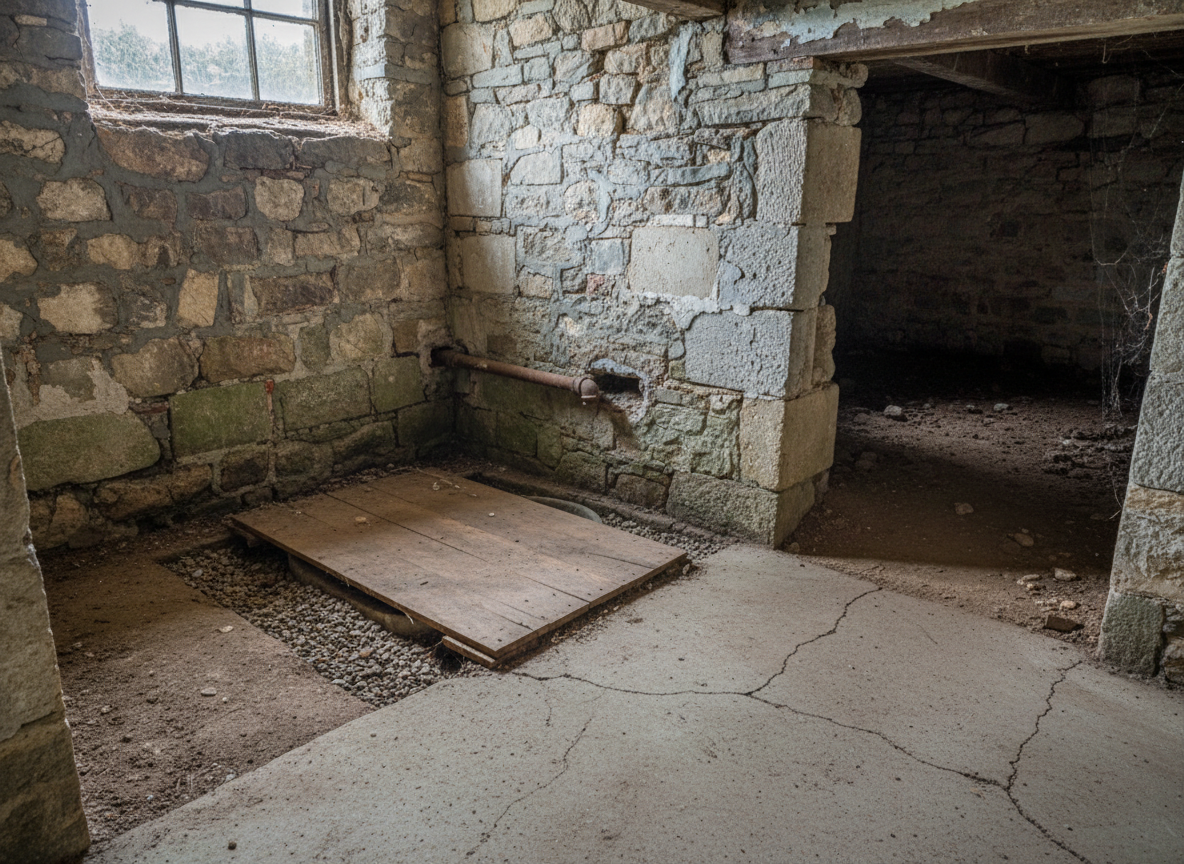
Older properties in York County typically have three to five active radon entry points, not just one—usually a mix of foundation cracks, an open sump pit, and gaps around utility penetrations. Homes built before the 1960s in neighborhoods like Downtown York, East York, and Pinehurst were rarely poured as single, continuous slabs, which means the foundation itself has natural seams that soil gas exploits. Finding and sealing all of them, not just the obvious crack, is what separates a system that actually holds test results under 4.0 pCi/L from one that quietly fails a retest six months later.
Fieldstone and Rubble Foundations
A lot of the housing stock in Downtown York and around Central Market House dates back well over a century, and many of these homes still sit on original fieldstone or rubble foundations rather than poured concrete. These foundations are essentially stacked stone with mortar joints that degrade over decades, creating a porous perimeter that soil gas moves through almost unimpeded. Unlike a modern slab where you're sealing one or two visible cracks, a fieldstone foundation might need parging or a dedicated membrane system to get airflow under control before a sub-slab depressurization system can even work efficiently. I've tested homes near Devers and Spring Garden Township where the stone foundation alone accounted for higher readings than any interior crack. This is also why a generic sealant-only approach fails on these houses—you need a system designed around the specific foundation type, which is part of why radon mitigation installation has to be evaluated house by house rather than off a checklist.
Dirt-Floor and Rubble Crawlspaces
North York and parts of West York have a lot of homes with partial basements paired with dirt-floor crawlspaces, and these crawlspaces are often the single largest radon entry surface in the house. Bare soil under a house acts like an open chimney for radon, and even a few inches of loose fill won't stop it. In my experience, crawlspace readings in these homes frequently run higher than the finished basement above them, which throws off DIY test results if someone only tests the living space. The fix usually involves laying a heavy-gauge vapor barrier sealed to the foundation walls and piers, then connecting that sealed space to a depressurization system. Crawl space mitigation in these older York homes is rarely a quick job—expect extra time for sealing around support posts, plumbing stacks, and uneven dirt grading before the fan even goes in.
Sump Pits and Interior Drain Tile
Homes throughout York County that have had basement waterproofing work done—common given the area's clay-heavy soil and heavy seasonal rain—often have an interior drain tile system feeding into a sump pit. That pit is usually uncovered or loosely covered, and it becomes a direct pipeline for soil gas straight into the basement. I see this constantly in East York and Spring Garden Township homes where a prior owner fixed a wet basement without ever considering radon. Sealing the sump pit with an airtight lid and tying it into the sub-slab depressurization system solves two problems at once, since the same suction that pulls soil gas also tends to pull it through the drain tile loop running around the foundation perimeter. Skipping this step is one of the most common reasons a system underperforms after installation.
Utility Penetrations and Foundation Cracks
Beyond the big structural entry points, every hole drilled through a foundation for plumbing, electrical conduit, or an old oil fill line is a potential radon pathway. Older homes near the York Fairgrounds and along the corridors toward Harrisburg and Lancaster often have multiple generations of utility work layered into the same foundation wall, each penetration sealed—or not sealed—by a different contractor over the decades. Common spots I check on every job:
- Gaps around water and sewer line penetrations
- Old, unused oil fill or vent pipe openings
- Hairline cracks at the cove joint where the wall meets the slab
- Expansion joints in poured floors
- Around interior support column footings
Each of these needs mechanical sealing with a proper sealant, not just caulk smeared over the surface, or the crack will reopen with normal foundation settling.