2026-09-16 · Dave Kessler
Factors That Affect Radon Mitigation Costs in York
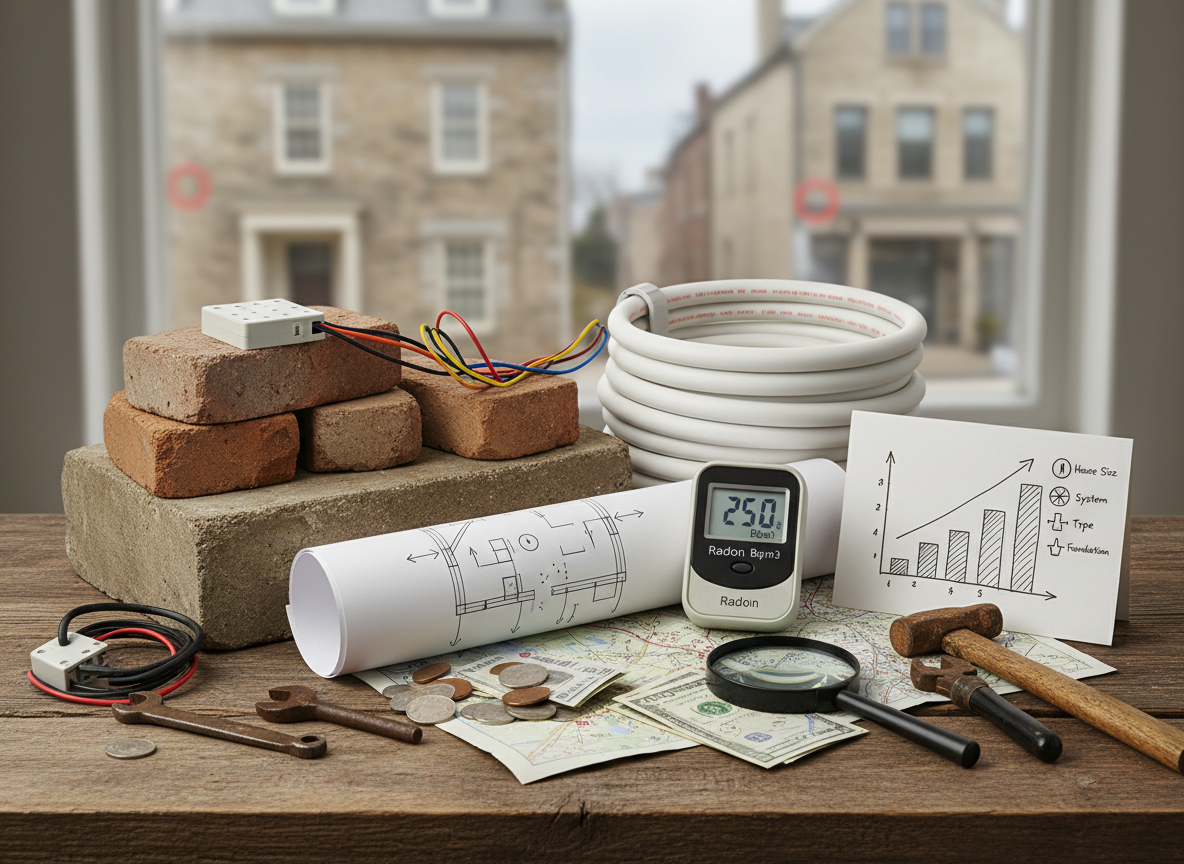
Most radon mitigation systems installed in York run $800–$2,500, with a typical single-fan sub-slab depressurization job landing around $1,200–$1,800. The wide range isn't arbitrary — it comes down to your foundation type, how many entry points the radon is using, where the fan and piping can be routed, and what your soil under the slab is doing. A cape cod in West York with a poured basement and clean gravel fill is a very different job than a rowhome near Downtown York with a stone-and-dirt crawl space and a fieldstone foundation from the early 1900s. After 15 years pulling permits and running pipe through basements from Spring Garden Township to North York, I can usually give a close estimate just from foundation age and layout before I even turn on a manometer.
Foundation Type and Soil Conditions
Foundation type is the single biggest cost driver. A simple poured concrete slab with one visible crack pattern is the cheapest and fastest to seal and depressurize — often a single suction point does the job. Homes with fieldstone or rubble foundations, common in older sections of Downtown York and East York, have multiple air gaps between stones that require more sealing work and sometimes a second suction point to get consistent vacuum across the slab. Soil matters too: York County sits on a mix of clay-heavy soils and limestone-influenced karst terrain in spots, and dense clay resists airflow, meaning the fan has to work harder or we need an additional pit to get proper vacuum readings. Gravelly, loose fill under a slab (common in newer builds around Spring Garden Township) creates better airflow and often lets us get away with a smaller fan and one suction point.
Crawl Spaces vs. Basements
Homes with crawl spaces, which show up a lot in North York and parts of East York, usually cost more to mitigate than basements because the process involves laying a sealed vapor barrier across the entire dirt floor before depressurizing it. Labor time goes up, and material costs rise with square footage of exposed soil. Basements, by contrast, usually just need slab penetrations and caulking around utility penetrations, which is faster. If your home has both a basement and a crawl space addition — common in older York properties that were expanded over the decades — you may need two separate systems or a combined design, which raises both material and labor costs. This is one of the most common surprises homeowners run into once we're on site; see our breakdown of crawl space mitigation for how pricing differs from standard basement work.
Number of Suction Points
A single suction point handles most homes under roughly 1,500 sq ft with good sub-slab communication — meaning air moves freely across the slab from one hole. Larger homes, split-level layouts, or homes with multiple foundation pours (additions built at different times, very common in Devers and Pinehurst where houses have been expanded room by room over 40+ years) often need two suction points to get uniform vacuum. Each additional suction point adds piping, labor, and sometimes a second fan, which can add $400–$800 to the total job. We test for this with a smoke pencil and manometer during the sub slab depressurization design phase, not by guessing — undersizing the system means callbacks and poor post-mitigation numbers.
Pipe Routing and Exterior Considerations
Where the pipe runs matters more than people expect. An interior-routed system run up through a closet and out the roof costs more in labor and drywall work but stays out of sight — a common ask in historic homes near Central Market House and the York County Courthouse where curb appeal matters. An exterior-routed system, running up the outside wall to above the roofline, is cheaper and faster to install but is visible from the street. Distance from the suction pit to the fan location, and from the fan to the discharge point above the roofline, both add to pipe and labor costs. Two-story homes need more pipe and sometimes scaffolding or ladder work for the roof penetration, which adds modest labor time compared to a single-story ranch.
Fan Size and Electrical Work
Fan selection is based on the vacuum needed to control your specific slab, not on house size alone. A standard radon fan rated for typical suburban homes runs the bulk of jobs in York, but homes with poor sub-slab communication, large square footage, or multiple suction points may need a higher-capacity fan, adding to material cost. Electrical work is another variable: if there's no nearby outlet for the fan, we need a dedicated circuit run, which is additional electrician-level labor. Homes in Downtown York's older housing stock sometimes have outdated electrical panels that complicate this step. Fan life typically runs 8–12 years depending on humidity and duty cycle, and our humid continental climate with York's hot, humid summers can shorten that slightly compared to drier regions.