2026-09-16 · Dave Kessler
Why Winter Increases Radon Readings in Pennsylvania
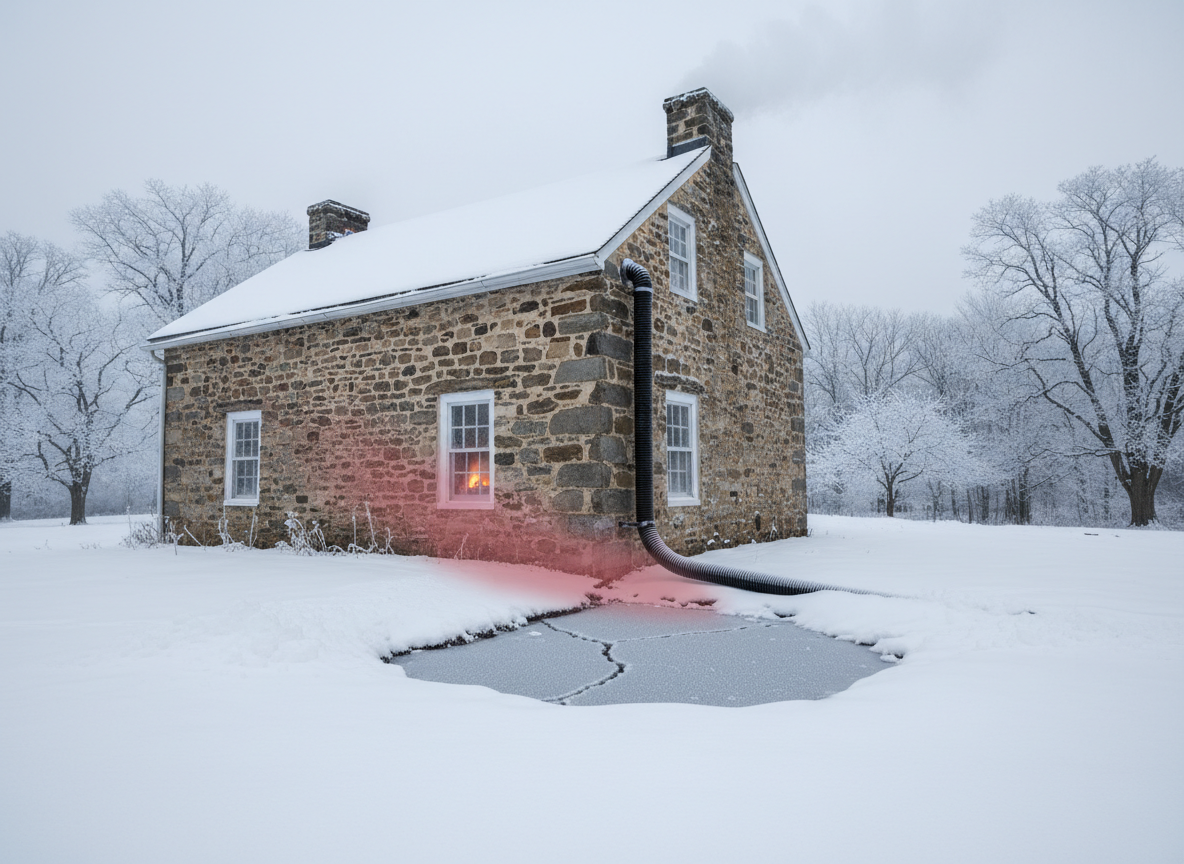
Radon readings in York, Pennsylvania homes typically rise 20-50% or more during winter months compared to summer baseline levels, and in older houses with leaky foundations that jump can be even larger. The cause is a combination of closed windows, running furnaces, and a physics phenomenon called the stack effect that actively pulls soil gas up through the foundation and into living spaces. If you tested your home in July and got a comfortable number, that same house could read very differently in January.
The Stack Effect Explained
Warm air rises. In winter, heated air inside a home rises toward the upper floors and attic, escaping through small gaps, and that rising air has to be replaced by something. The replacement air gets pulled in from the lowest points of the house — the basement, crawl space, and foundation cracks — because that's the path of least resistance. In York County's humid continental climate, where winter temperatures regularly sit well below the indoor temperature for months at a stretch, this pressure difference is strong and constant. That negative pressure at the foundation level is exactly what draws radon gas up out of the soil and into the home, often through the same cracks and utility penetrations discussed in our piece on common radon entry points in older York properties.
Closed Homes Trap What They Pull In
Beyond the stack effect, winter behavior changes ventilation. Windows stay shut for months, storm doors go up, and many homeowners seal drafts around Downtown York's older row homes or the classic Cape Cods common in North York and East York. All of that sealing is great for heating bills but terrible for radon, because it removes the natural air exchange that would otherwise dilute soil gas that does make it indoors. A house that tests fine in June with windows cracked open can trap the same radon source and concentrate it once everything is buttoned up for the cold season.
Why York County Housing Stock Makes This Worse
A lot of the housing around Spring Garden Township, West York, and the Devers area sits on foundations poured decades ago, before radon barriers or sub-slab vapor retarders were standard practice. Fieldstone and rubble foundations, common in some of the older parts of York County near Central Market House and the courthouse district, have irregular gaps that are difficult to seal completely and give soil gas multiple pathways in. Add frozen or saturated ground after winter precipitation, which can actually increase soil gas pressure beneath the slab, and you get a seasonal spike that's very real and well documented, not just anecdotal.
What This Means for Testing
Because of this seasonal swing, a single summer test can understate a home's true radon exposure. The standard recommendation — and what we tell every homeowner in York — is to test during colder months, or at minimum use a longer-term test that captures at least a few weeks including some cold snaps. If you're buying or selling a home in East York or near the York Fairgrounds during spring or summer, ask whether the test was done under winter-like closed-house conditions, since a low summer number doesn't rule out a winter problem. Our radon testing service accounts for this by recommending closed-house protocols regardless of season.
What To Do If Winter Numbers Are High
If a winter test comes back elevated, the fix isn't to wait for warmer weather — the underlying soil gas pressure and entry points don't go away, they just become less noticeable when windows are open. A properly designed sub-slab depressurization system addresses the root cause by drawing soil gas from beneath the foundation and venting it above the roofline before it ever enters the living space. This works whether the home has a full basement in Pinehurst or a crawl space near Codorus State Park — crawl spaces need their own approach, which is covered under our crawl space mitigation service. Homes with finished basements or additions sometimes need adjustments to an existing system rather than a whole new install; our radon mitigation installation page walks through what that typically involves and what drives the cost differences between a straightforward install and a more complex one.