2026-08-12 · Dave Kessler · 4 min read
Bleach, Vinegar, and What Actually Kills Mold
If the stain disappeared and the smell came back in August, the product did not fail. The water was still there.
- Where bleach works and where it lies to you
- Vinegar, peroxide, and “mold sprays”
- A cleanup sequence that matches the material
- Protect yourself on the small jobs
Where bleach works and where it lies to you
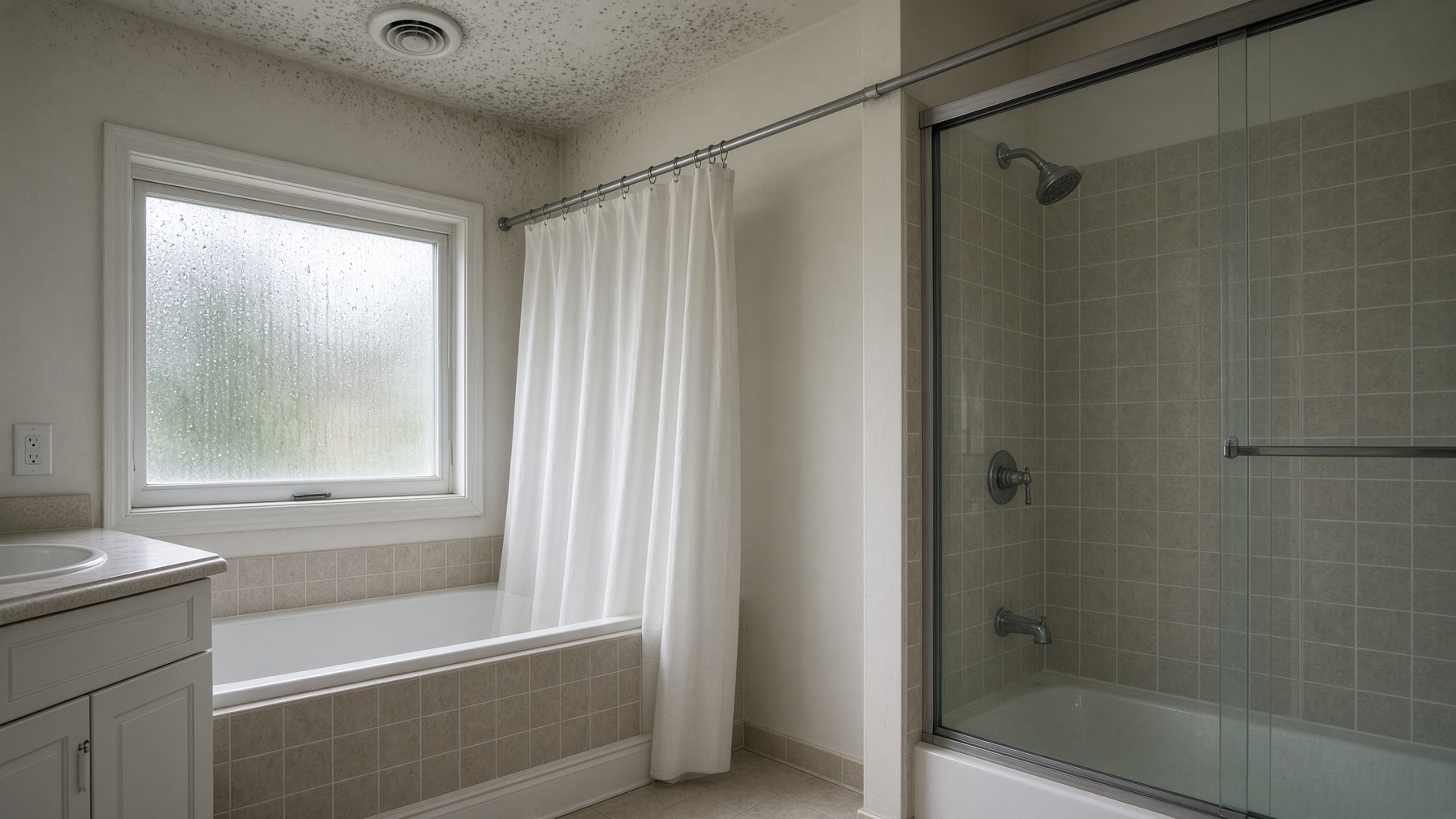
Sodium hypochlorite lightens color. On a ceramic shower it can look like victory. On the paper face of drywall, on a floor joist, or on a painted block wall in North York, the stain fades and the colony in the pores is still fed by whatever damp is left — including the water you just added.
EPA’s cleanup advice for small areas leads with soap and water, not with a bleach cocktail. Dead-looking pigment is not the same as dry gypsum.
Vinegar, peroxide, and “mold sprays”
White vinegar (about 5% acetic acid) is a reasonable wipe for non-porous surfaces, and some people tolerate the smell better than chlorine. Hydrogen peroxide is another hard-surface option. Borate treatments are sometimes used on bare wood that will stay dry afterward. None of them are magic on a wall that is still reading wet on a meter.
Store sprays that promise to “kill mold on contact” still require you to scrub, rinse or wipe, and dry. If the label says to mix with bleach, do not. Chlorine plus ammonia, or chlorine plus an acid like vinegar, makes a gas you do not want in a closed cellar.
A cleanup sequence that matches the material
- Stop the water and lower the humidity. Open nothing else until this is true.
- Porous and crumbling — wet drywall, ceiling tile, carpet pad, insulation: bag it, seal the bag, throw it out. Do not bleach it in place.
- Hard surfaces — tile, glass, metal, sealed countertops: scrub with detergent, rinse, dry. Disinfect if you want, after the soil is gone.
- Solid wood that is structurally sound: scrub, then dry until a meter says so. Sand or plane only if the wood stays sound and you can control the dust.
- Concrete and block: scrub, then dry the room with a dehumidifier, not a fan blowing into the stairwell. Paint only after it stays dry. See painting over basement mold.
Protect yourself on the small jobs
Even a bathroom ceiling is not a casual wipe if you stir it dry. Gloves, goggles, and at least an N95, long sleeves, and the bath fan or a window — not a box fan aimed at the hallway. Wash clothes afterward. Children and pets are not helpers on this chore.
If the patch is bigger than a sheet of drywall or two, or you are looking at sewage, stop. That is the line in can I remove mold myself.
Questions people also ask
+Does vinegar kill black mold?
+Should I fog a basement with bleach?
These pages are homeowner education from Radon Mitigation of York, written by Dave Kessler. They are not a medical diagnosis, a species identification, or an insurance determination. Color does not tell you which mold you have. If someone in the house is sick, talk to a physician. EPA's homeowner guidance treats roughly 10 square feet as the line where many people stop DIY cleanup and call a remediation crew — sooner if sewage, HVAC, or anyone immunocompromised is involved. We are a radon and basement crew. When we are already under a York house we will tell you what we see and what we would do in our own place. We do not pretend a radon fan is a mold remedy.